

'A NEW MINDSET FOR THE PROTECTION OF THE UNBORN'
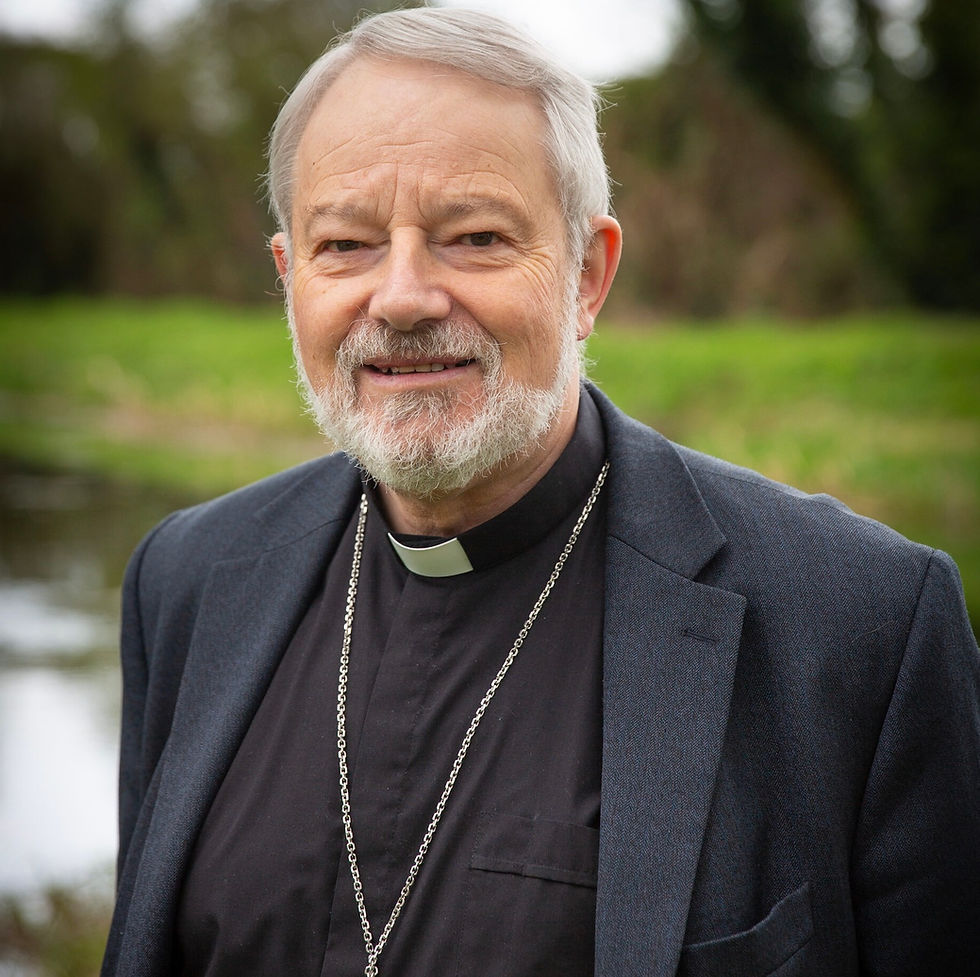
Bishop Kevin Doran, Chair of the Irish Catholic Bishops' Conference's Council for Life.
In the homily below, delivered during Mass at Saint Malachy’s Church, Belfast, in advance of the Rally for Life on Saturday, 4 July 2026, Bishop Kevin Doran, argues what is becoming increasingly clear, namely that: "Human dignity is not given to us by the State, or by our parents. Neither the State, not our parents, nor anybody else can take it away. It is inalienable. Our dignity and our rights belong to us by virtue of the fact that we are human beings." He also makes the point that "we need to be promoting a new way of thinking and speaking about pregnancy, not as a burden or a crisis, but as a gift from God and as a privilege."
'I was down in Lourdes last week and I had to take a train to Toulouse for my flight home. The train was delayed almost an hour because of the extreme heat. I wasn’t even off the platform in Toulouse before I had a text message from the French Railways to say that I would have a right to compensation, because my train had been delayed. Later on, as I was going by taxi to the airport, I mentioned to the taxi driver what had happened. I commented that, "of course France is the birthplace of human rights”. He laughed and said: “Yes, but it depends on who you are."
Today, as it happens, is the 4 July, Independence Day in the United States. The preamble to the Declaration of Independence reads: "We hold these truths to be self-evident, that all men are created equal, that they are endowed by their Creator with certain unalienable Rights, that among these are Life, Liberty and the pursuit of Happiness. This vision of human rights and the dignity of the person has its origin in the first Chapter of the Book of Genesis, where we read: God created humans in his image, in the image of God he created them male and female he created them.(Genesis 1:27)"
Each one of us, from the first moment of our existence, is created by God for relationship with him and to take our share of responsibility for the care of the earth, which is “our common home” (cf Laudato Si #1).
Just a year ago, the Dicastery for the Doctrine of the Faith, presented us with a powerful reflection on the dignity of the human person. It begins with these words: “Every human person possesses an infinite dignity, inalienably grounded in his or her very being, which prevails in and beyond every circumstance, state, or situation the person may ever encounter. This principle, which is fully recognizable even by reason alone, underlies the primacy of the human person and the protection of human rights. In the light of Revelation, the Church resolutely reiterates and confirms the ontological dignity of the human person, created in the image and likeness of God and redeemed in Jesus Christ” (Dignitas Infinita #1)
Human dignity is not given to us by the State, or by our parents. Neither the State, not our parents, nor anybody else can take it away. It is inalienable. Our dignity and our rights belong to us by virtue of the fact that we are human beings. To go back to the taxi driver in Toulouse – it should not depend on who you are!
How is it then that, from generation to generation, and in every society, while holding firmly to their own rights, people have found excuses to deny the fundamental rights of others, on the basis of their colour, their sex, their ability or disability, or simply because they live in their mother’s womb, awaiting birth.
We gather here in Saint Malachy’s Church as people of faith to give thanks to God for the gift of life and to ask God’s help in building a society in which every human life is respected. It has to be a cause of concern for us that most of those who promote abortion on this island, and most of those who choose it are Christians, at least in name. We might ask ourselves why this is so. Immediately after the Creation narratives, the Bible offers us a spiritual explanation. It describes how man and woman destroyed their God-given happiness, because they were arrogant enough to think that they knew better than God what was good for them. Perhaps we are not so different.
In his recent encyclical letter on the human person and artificial intelligence, Pope Leo XIV suggests that, in an age of technology, we easily become preoccupied with perfection. Social media reflects back to us images of a perfect life, against which we compare ourselves and others. In that kind of world, rather than accepting children as a gift from God, we only accept the babies that fit in with our plans.
Our first reading this morning offers us words of hope (Amos 9:11-15). The language is about rebuilding what has been broken down; about fruitful harvests. God has not forgotten his people; He wants to make all things new. The clear invitation for us is to return to a more faithful living of our own relationship with him, because He is the source of perfection. He is the one who gives meaning to our lives. It is he who will show us, through his Spirit, what we need to do.
In our Gospel reading (Mt 19:14-17), Jesus offers us two images of fresh beginning. He tells us not to be trying to put a new patch on old clothes, because the patch will shrink the first time you wash it, and the hole will be even bigger than it was before. Likewise he tells us that fresh new wine cannot be put into old wine skins, because the old skins will just split open and the wine will be lost. These are images from another time and place, but they are basically telling us that, if we want something to change, we need to do something new. If we want to be part of the renewal of our society, we need to adopt what Pope Leo calls a “new mindset”. This new mindset is about prioritising the truth. It involves the careful discernment of everything that we read, especially on social media, which can often be so convincing and yet so false.
But we are not just called to hold the truth in our own minds and hearts, but to speak the truth about human life clearly and respectfully in the public space, where we live and work. In that way we contribute to changing the mindset of society.
We need to be promoting a new way of thinking and speaking about pregnancy, not as a burden or a crisis, but as a gift from God and as a privilege.
Finally, it is not enough that we protest about abortion, but we need to be working closely together in our local communities, to find new ways of supporting mothers who face particular challenges in pregnancy. This requires courage, generosity and creativity. The practical and pastoral outreach to women in crisis pregnancy as well as to people who have been touched by abortion is far too dependent on a very small number of people and on very limited resources. I believe we can do much more and that would lend credibility to our rejection of abortion as a solution to any human problem.
Comments